Established in 1969, the Cocha Cashu Biological Station – located in the heart of Manu National Park – has been a key place for unveiling the mechanisms of tropical ecology and the mysteries of Amazonian life. After a decade under the administration of San Diego Zoo Wildlife Alliance Peru, the station is preparing to face the new challenges of the future.
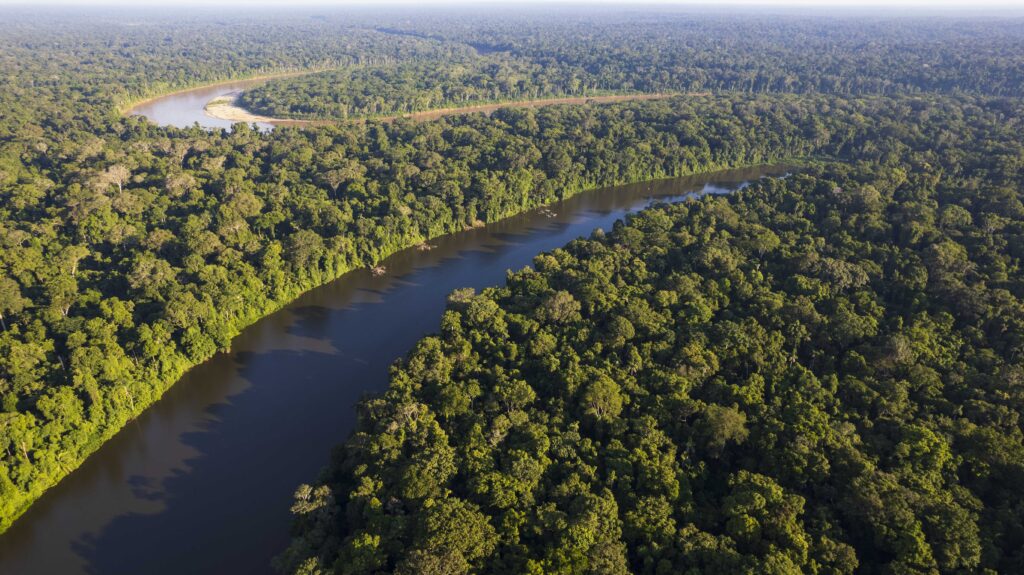
Cocha Cashu seen from the air, with the Manu River in the background.
Cocha Cashu Biological Station: A Legacy of Discovery
Few places in the world can compare with Cocha Cashu. And this statement has much more to do with its abundant fauna, with its more than 50 km of trails where one can observe huge trees that stand like cathedrals in the middle of the forest, or with the waters full of life of its legendary lagoon. There is something in this place located in the most remote part of the Peruvian Amazon that makes it unique.

Cocha Cashu Biological Station
One of the causes of this magical impression is that some of the world’s most important scientists were here. It is here that John Terborgh conducted his pioneering studies on tropical forest dynamics. Moreover, his study plots are still alive and sending valuable data to those who have followed his legacy. The likes of Kai Otte, Louise Emmons and Carol Mitchell have walked its trails while doing pioneering work with lizards, monkeys and jaguars. Ted Parker, one of the greatest ornithologists in history, also navigated the oxbow lake and studied the behaviour of birds in these enigmatic forests. Here, as César Flores Negrón, director of the Peruvian branch of the San Diego Zoo Wildlife Alliance, in charge of the administration of the station, says, “several pages of the natural history of the tropics have been written. Much of the knowledge that has been developed at Cashu is now part of the textbooks that biology students read around the world.“
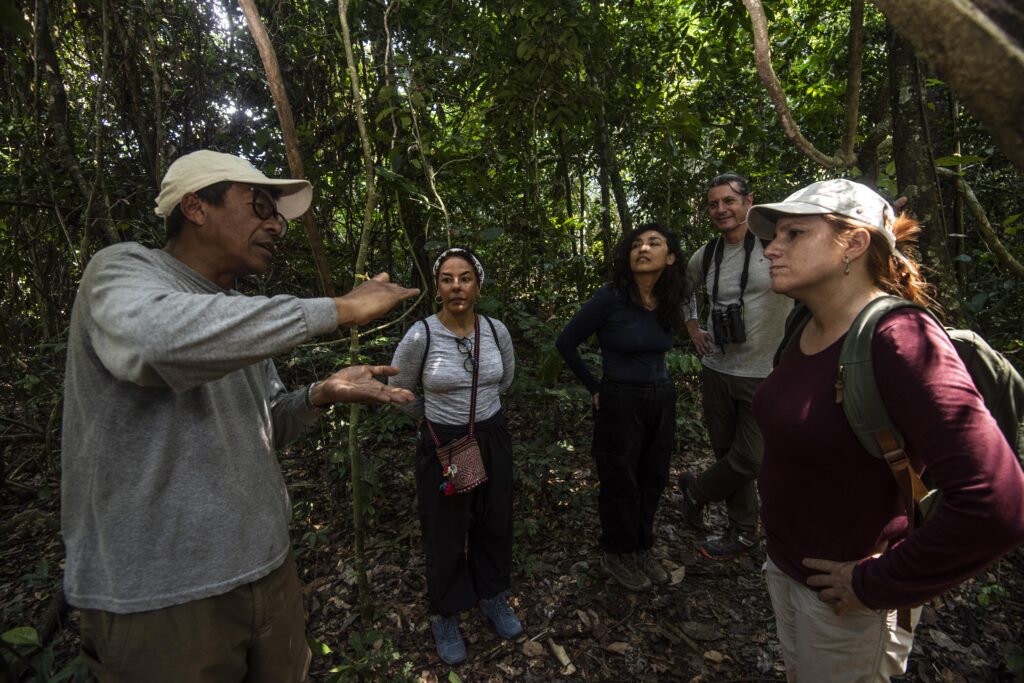
César Flores Negrón, director of the San Diego Zoo Wildlife Alliance, guides visitors to the Cocha Cashu Station.
50 Years of Research at Cocha Cashu Biological Station
For more than half a century Cocha Cashu has been a beacon guiding research on flora, fauna and ecology in the Neotropics. Nearly a thousand published papers attest to this. And today, the task continues, training the scientists of tomorrow through courses such as the Wallace course for Peruvian students of biology and related careers; the Stefano Varese course, dedicated to social sciences for conservation; and the primatology course offered every two years. Likewise, the station is permanently visited by students from all over the world and researchers who continue the legacy of the pioneers.
Thanks to its EduCashu program, the station dedicates considerable effort to environmental education, working intensively with the communities located inside the park and with the population of the buffer zone.
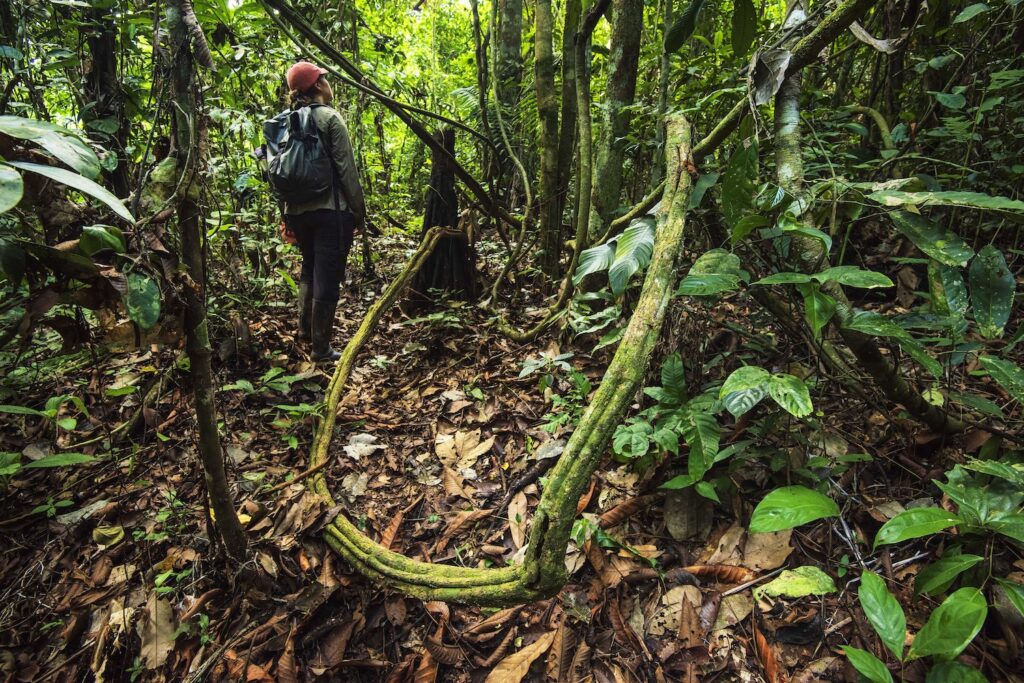
Cocha Cashu has more than 50 km of trails ideal for scientific research.
Cocha Cashu and Regenera: Conservation in the Manu Landscape
Since 2017, Cocha Cashu has been a member of Regenera. As César Flores points out, “We have been part of the Regenera community for nine years. Concerned about the environmental footprint of our operations, we support conservation actions in the Manu Landscape, where the communities of Shipetiari and Palotoa-Teparo are working to protect their forests and develop sustainable productive activities.“
Of the nearly half a thousand visitors that visit the station each year on average, more than half come from outside the region, from other countries or from coastal or Andean cities that require long trips by plane, land and then by river. This impact on nature is being compensated by Cocha Cashu, with contributions from each visitor that are then transferred through Regenera to the communities of the Manu Landscape: “Although we know that our contribution is still small, when we visit the communities and see the hard work that these people are doing for the conservation of their territory that they love so much, we feel proud to collaborate with this shared effort,” says César Flores.
A Beacon of Hope for the Future of the Amazon
In the face of the climate crisis, the advance of illegal economies and the political and social instability of an increasingly convulsive region, the San Diego Global Wildlife Alliance and Cocha Cashu’s commitment to conservation, research and environmental education takes on an unusual value. A beacon of hope and an example for the future.

